6 Collagen Supplements For Skin And Joints That Actually Work in 2025

Table of Contents
Listen, if you’ve been scrolling through your feed lately, you’ve probably noticed everyone and their grandma talking about collagen supplements. And honestly? They’re not wrong to be hyped about it. Your skin’s elasticity starts declining around age 25 (yep, that early), and those creaky joints don’t fix themselves.
The collagen industry is absolutely booming right now – we’re talking about an $8.64 billion market by 2029. But here’s the thing that drives me crazy: not all collagen supplements are created equal, and most people have no clue what they’re actually buying.
So let’s cut through the noise and talk about what really works.

Why Your Body is Literally Screaming for Collagen Right Now
Here’s something wild – collagen makes up about 30% of the total protein in your body. It’s basically the glue holding everything together. Your skin, bones, tendons, ligaments, and even your hair rely on this stuff to stay strong and flexible.
But here’s where it gets frustrating. After you hit your mid-twenties, your natural collagen production drops by roughly 1% every single year. By the time you’re 40? You’ve lost a significant chunk of what keeps you looking and feeling young. That’s where hydrolyzed collagen comes into play – and trust me, understanding this form is gonna change everything for you.
Understanding Collagen Types I II III – The Breakdown You Actually Need
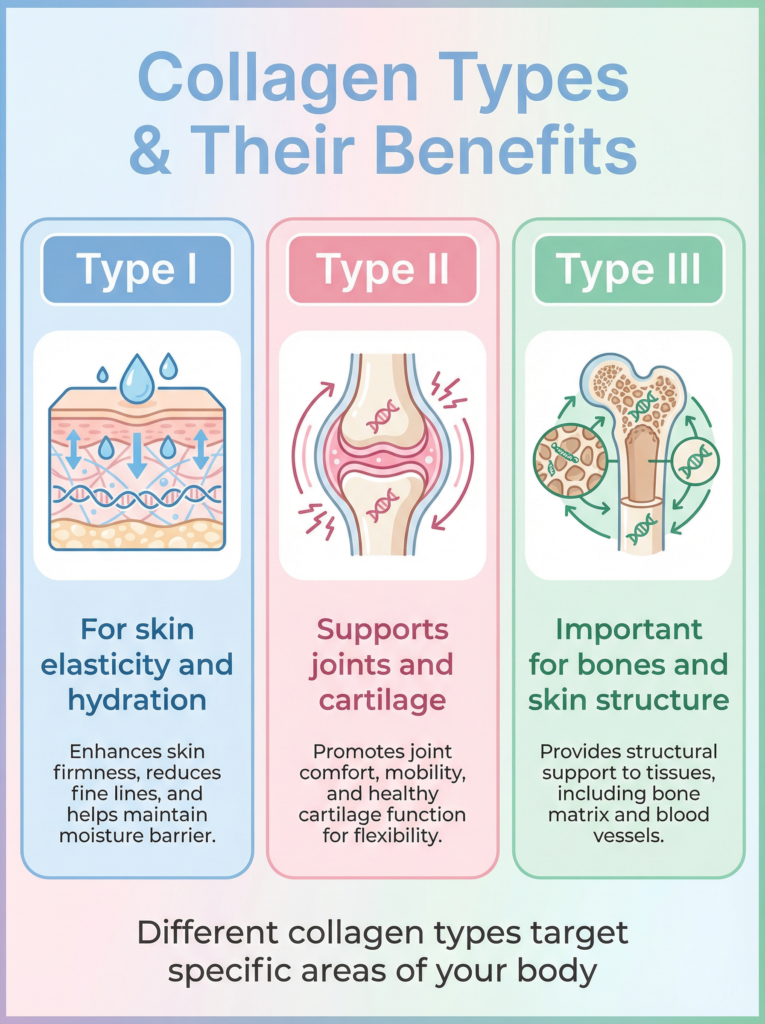
Okay so here’s where people get confused. There are actually 28 different types of collagen in your body, but only three really matter when you’re shopping for supplements:
Type I Collagen – This is the superstar, making up about 90% of your body’s collagen. It’s what keeps your skin firm, your bones strong, and your tendons working properly. When you see those “anti-aging” claims on bottles? They’re talking about Type I.
Type II Collagen – Think joints and cartilage. This one’s specifically designed for cushioning your joints and keeping them flexible. If you’re dealing with stiff knees or achy elbows, Type II is your best friend.
Type III Collagen – Usually hangs out with Type I, supporting your skin structure, muscles, and blood vessels. You’ll often see Type I and III bundled together in supplements because they work so well as a team.
Most quality collagen peptides combine these types strategically based on what they’re targeting. Skin and anti-aging formulas? Type I and III. Joint health? Type II all the way.
What Makes Hydrolyzed Collagen Different (and Why It Matters)
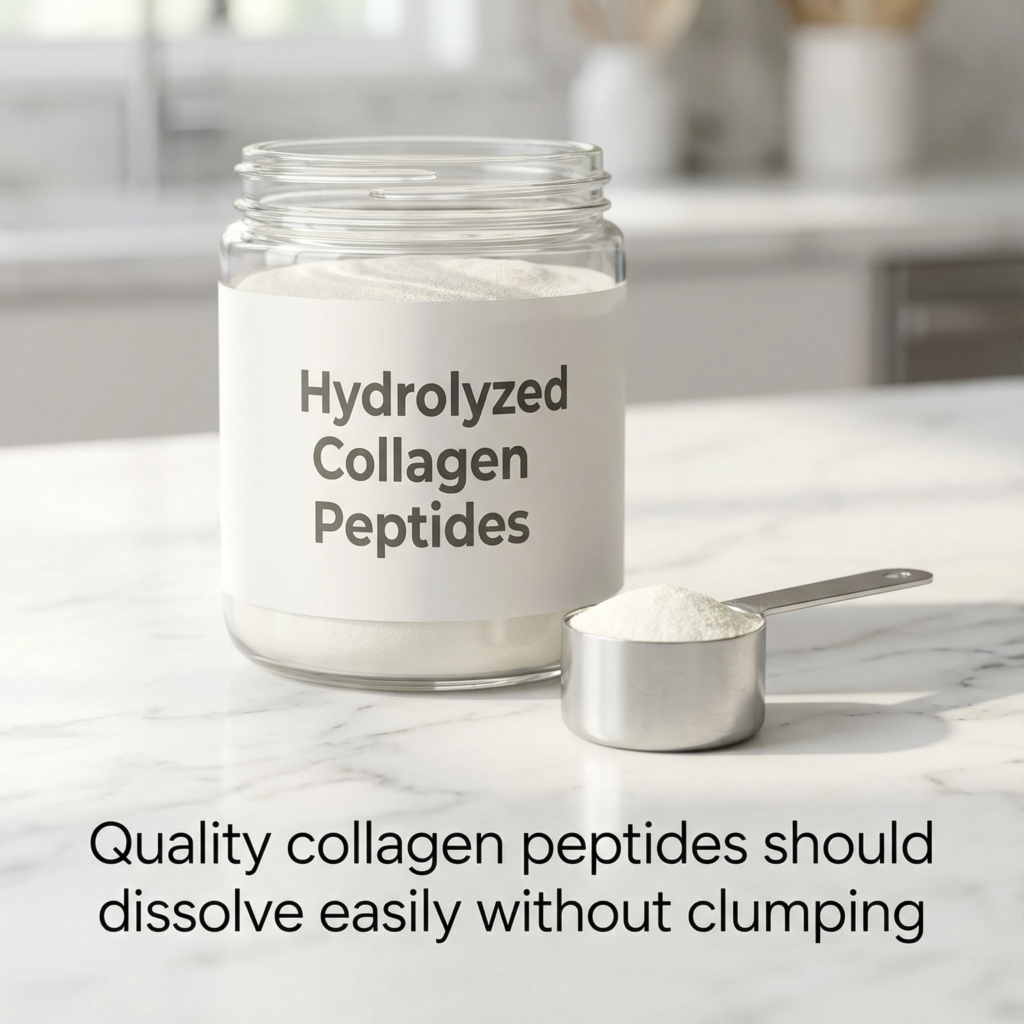
Here’s a term you absolutely need to know: hydrolyzed collagen. Sounds fancy, but it just means the collagen has been broken down into smaller pieces called peptides through a process called hydrolysis.
Why should you care? Because regular collagen molecules are too big for your body to absorb properly. Collagen peptides are small enough to actually get into your bloodstream and do their job. When you see “hydrolyzed” on a label, that’s actually a good sign – it means the product is designed for maximum absorption.
Research shows that these peptides travel to your dermis and cartilage, where they stimulate fibroblast production and boost your body’s natural collagen synthesis. Pretty cool, right?
The 6 Best Collagen Supplements for Glowing Skin and Happy Joints
Alright, let’s get to what you really came here for. After digging through tons of research, reviews, and clinical studies, here are the top picks that actually deliver results.
Vital Proteins Collagen Peptides – The Fan Favorite
This one’s everywhere for a reason. Vital Proteins has become practically synonymous with collagen supplements, and their unflavored peptides powder is incredibly versatile. You get 20 grams of Type I and III collagen per serving, sourced from grass-fed bovine.
What makes it stand out is the purity – no artificial flavors, no fillers, just pure hydrolyzed collagen that dissolves easily in both hot and cold drinks. People love adding it to their morning coffee or smoothies without changing the taste.
The downside? It’s a bit pricey compared to some competitors. But if you want a trusted brand with consistent quality, this is it.
Garden of Life Grass Fed Collagen Peptides – Quality Meets Value
Garden of Life gives Vital Proteins serious competition. Their grass-fed collagen peptides offer 20 grams per serving – that’s double what you get with Vital Proteins’ smaller scoop size.
The ingredient list is clean, the sourcing is transparent, and customers consistently rate it 4.5 stars. If you’re looking for the best bang for your buck without sacrificing quality, Garden of Life should be on your radar.
Momentous Collagen Peptides – The Athletic Performance Booster
Now if you’re active or into resistance training, listen up. Momentous formulated their collagen supplements specifically for athletes. Each serving packs 10 grams of grass-fed bovine collagen plus 5 grams of FORTIGEL® – a clinically researched ingredient that specifically targets tendon and ligament health.
They’ve also added Vitamin C to support collagen formation, which is smart because your body needs it for collagen synthesis. This formula focuses on soft tissue repair, muscle recovery, and joint mobility. It’s more specialized than the others, but that specialization pays off if you’re pushing your body hard.
Valebio Collagen Complex – The Comprehensive Joint Support Formula
Valebio earned top marks for joint health by including all three types of collagen in one formula. That’s Type I, II, and III working together to support not just your joints, but your skin, bones, and connective tissue too.
What caught my attention is their use of Naticol® collagen, which is a recognized quality marker in the industry. The formulation is comprehensive, and the brand emphasizes transparency about their sourcing and testing – something you should always look for in collagen supplements.
Marine Collagen Options – The Sustainable Choice
For those who prefer fish-sourced hydrolyzed collagen over bovine, marine collagen is having a moment. Marine collagen typically contains Type I collagen and is absorbed slightly more efficiently than bovine sources according to some studies.
Brands like Pure Marine Collagen offer Naticol® marine collagen combined with vitamins and minerals. The sustainability angle is appealing too, since most marine collagen comes from fish industry byproducts that would otherwise go to waste.
Just be aware that marine collagen peptides can have a slight fishy smell or taste, even in “unflavored” versions. Mixing it into smoothies or flavored drinks usually solves this.
Type II Specific Formulas – For Serious Joint Issues
If joint pain is your main concern – particularly from osteoarthritis or heavy physical activity – you might want a dedicated Type II collagen supplement. These are usually derived from chicken or bovine cartilage and focus exclusively on joint cartilage support.
While they won’t give you the skin benefits of Type I and III, the targeted approach can provide better relief for joint discomfort. Clinical studies show meaningful reductions in pain scores and improved mobility with consistent use.
How Long Before You Actually See Results from Collagen Supplements
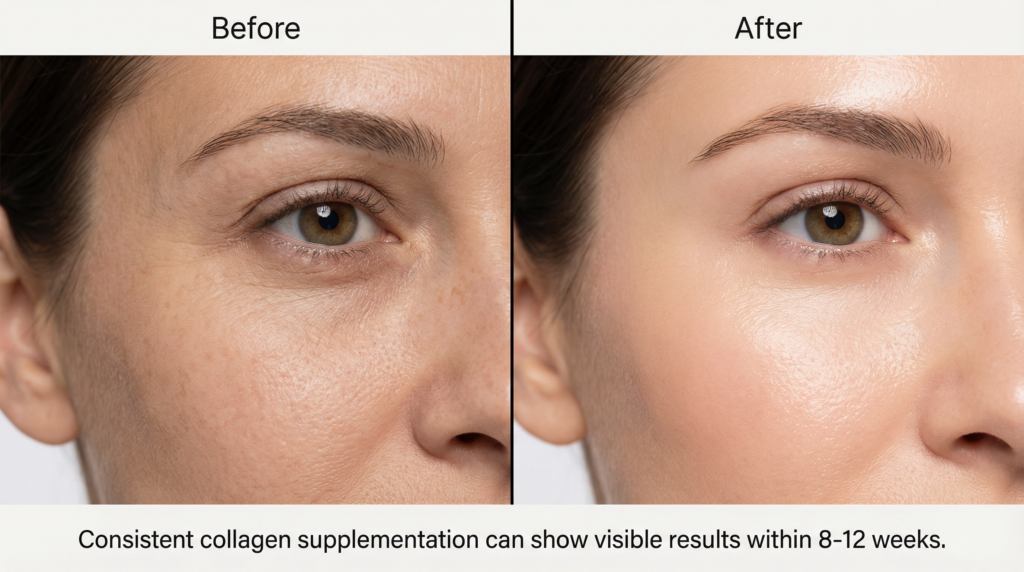
Okay, real talk – collagen supplements aren’t magic pills. The research shows you need consistent use for 8 to 16 weeks before seeing noticeable changes. Some people report improvements earlier, but that’s the scientifically-backed timeframe.
For skin benefits like increased elasticity and reduced wrinkle depth, studies used 60-90 days of supplementation. Joint improvements tend to show up around the same timeline, with some studies reporting better results after 3-6 months of daily use.
The key word here is daily. You can’t take collagen peptides sporadically and expect miracles. Consistency matters way more than the specific time of day you take it.
The Right Dosage – How Much Collagen Do You Really Need
Here’s what the clinical research actually says: effective doses range from 2.5 grams all the way up to 15 grams per day. Most studies showing significant benefits used between 5-10 grams daily.
For skin and anti-aging: 2.5-5 grams seems to be the sweet spot
For joint health: 5-10 grams produces better results
For athletic recovery: 10-20 grams is often recommended
More isn’t always better though. Your body can only process so much at once, and mega-dosing won’t speed up results. Stick to the recommended serving on your chosen supplement, which is typically designed based on clinical research.

What to Look For When Shopping for Collagen Supplements
The collagen supplements market is crowded and honestly, some products are total garbage. Here’s your shopping checklist:
Hydrolyzed or Peptides – If it doesn’t say “hydrolyzed” or “peptides,” your body probably can’t absorb it well. This is non-negotiable.
Clear Type Information – The label should tell you exactly which collagen types are included. Vague labeling is a red flag.
Source Transparency – Know where it comes from. Grass-fed bovine, wild-caught marine, or pasture-raised chicken are quality indicators.
Third-Party Testing – Look for brands that test for purity and contaminants. Quality brands will mention this prominently.
No Fillers or Artificial Ingredients – The best collagen peptides have short, clean ingredient lists. If you see a bunch of stuff you can’t pronounce, keep looking.
Amino Acid Profile – Good supplements list the amino acids, particularly glycine, proline, lysine, and arginine. These are the building blocks that matter.
Bovine vs Marine vs Chicken – Which Source is Actually Best
This is where personal preference comes in, but there are some differences worth knowing:
Bovine Collagen (from cows) – Contains Type I and III, great for skin, bones, and general use. It’s the most common and usually the most affordable. Grass-fed sourcing matters for quality.
Marine Collagen (from fish) – Primarily Type I, absorbed slightly better according to some research. More sustainable, but pricier. Works great for skin-focused goals.
Chicken Collagen – Rich in Type II, specifically targets cartilage and joints. Less common for general supplements, more often found in joint-specific formulas.
There’s no universally “best” source – it depends on your specific goals and dietary preferences. Some people avoid bovine for religious or ethical reasons, while others find marine collagen too expensive for daily use.

Do Collagen Supplements Actually Work? What Science Really Says
Let’s address the skepticism, because it’s valid. The science on collagen supplements has gotten a lot stronger in recent years, though it’s not perfect.
A meta-analysis of 19 studies involving 1,124 adults found that collagen supplementation significantly increased skin elasticity and density while reducing wrinkle depth. These weren’t huge dramatic changes, but they were statistically significant and visible.
For joints, multiple double-blind trials showed lower pain scores and better mobility compared to placebo groups. Some studies even documented increased cartilage volume and bone mineral density, particularly in post-menopausal women.
The mechanism makes sense too. When you consume hydrolyzed collagen, it breaks down into di- and tri-peptides that your body can absorb. These reach your dermis and cartilage, where they stimulate your cells to produce more collagen naturally.
However – and this is important – results vary by individual, product quality, dosage, and consistency. Some studies show minimal differences from placebo. The biggest benefits appear in people who already have age-related or disease-related collagen deficits.
Combining Collagen with Other Nutrients for Maximum Results
Here’s something most people miss: collagen supplements work better when paired with certain nutrients.
Vitamin C is crucial because your body literally cannot synthesize collagen without it. Many quality supplements include it, or you can take it separately.
Hyaluronic Acid works synergistically with collagen for skin hydration and joint lubrication. Some comprehensive formulas combine these.
Vitamin E and Biotin support skin health and work alongside collagen for better overall results.
The research also suggests that combining collagen peptides with regular resistance training produces better muscle and joint outcomes than supplementation alone. Exercise stimulates collagen production on its own, so you’re getting a multiplier effect.
Common Mistakes People Make with Collagen Supplements
After researching this extensively, I’ve noticed patterns in what doesn’t work:
Inconsistent Use – Taking it randomly won’t cut it. You need daily consumption for months to see benefits.
Wrong Type for Goals – Buying Type II when you want skin benefits, or Type I when you need joint support. Match the type to your goals.
Expecting Overnight Results – This isn’t Botox. Give it at least 8-12 weeks before judging effectiveness.
Ignoring Quality – Cheap collagen supplements with poor bioavailability are just expensive urine. Hydrolyzed peptides matter.
Not Checking Dosage – Some products have such low doses that you’d need to triple the serving to match clinical study amounts.
Skipping Vitamin C – If your supplement doesn’t include it, add a separate C supplement or eat citrus fruits.
Plant-Based and Vegan Collagen Alternatives
Here’s the tricky part: true collagen only comes from animal sources. There’s no such thing as plant-based collagen – plants don’t make collagen.
However, there are vegan “collagen boosters” that provide nutrients your body uses to make its own collagen. These typically include vitamin C, amino acids, silica, and other building blocks.
Do they work as well as actual collagen peptides? The jury’s still out. There’s significantly less research on vegan alternatives compared to animal-derived hydrolyzed collagen. Some people report benefits, but the clinical evidence is much weaker.
If you’re vegan or vegetarian, focus on maximizing your body’s natural production through diet and these boosters rather than expecting the same results as animal-derived supplements.
The Bottom Line on Choosing Your Collagen Supplement
Look, the collagen supplements market can feel overwhelming, but it doesn’t have to be complicated. Here’s what actually matters:
Start with your primary goal – skin, joints, or both. That determines which collagen types you need. Type I and III for skin and general health, Type II for joints, or a combination formula for comprehensive support.
Verify the supplement uses hydrolyzed collagen or collagen peptides – this is about bioavailability. Then check the source quality and third-party testing. Transparency matters.
Commit to at least 12 weeks of consistent daily use before deciding if it works for you. Track your progress with photos or notes because changes happen gradually.
And remember, collagen supplements work best as part of an overall healthy lifestyle. They’re not gonna reverse decades of sun damage or fix joints you’ve been destroying with poor form at the gym. But used consistently alongside proper nutrition, hydration, sun protection, and exercise? They can make a real difference.
The science supports their use, customer reviews consistently report benefits, and the safety profile is excellent. Whether you go with Vital Proteins, Garden of Life, Momentous, or another quality brand, the most important thing is finding one you’ll actually take every single day.
Your skin and joints will thank you in a few months. Trust the process.