5 Carnivore Diet Benefits And Risks
5 Carnivore Diet Benefits And Risks
Introduction to the Carnivore Diet
carnivore diet has taken the nutrition world by storm, promising radical transformations through one simple rule: eat only animal products. Imagine ditching every plant in sight— no veggies, no fruits, no grains—just meat, fish, eggs, and maybe some dairy if you tolerate it. This all-meat diet, sometimes called the zero carb diet or animal-based diet, echoes the eating patterns of our hunter-gatherer ancestors who thrived on whatever game they could hunt.
People turn to this approach for all sorts of reasons, from shedding stubborn pounds to clearing up chronic inflammation or even boosting focus at work. But it’s not without controversy. While fans rave about newfound energy and health perks, critics point to missing nutrients and heart health worries. In this deep dive, we’ll unpack five standout carnivore diet benefits alongside real risks, drawing from surveys, studies, and real folks who’ve tried it.
We’ll explore how it sparks weight loss like nothing else, sharpens your mind, tames inflammation, stabilizes blood sugar, and makes meal planning a breeze. Then we’ll balance the scales with downsides like nutrient gaps and gut issues. By the end, you’ll have the tools to decide if this meat-only path fits your life, especially if you’re eyeing fasting for weight loss as a combo strategy. Stick around for science-backed insights, user stories, and step-by-step tips to make it work.
Originating from low-carb pioneers like Shawn Baker and Paul Saladino, the carnivore diet builds on keto principles but goes extreme by cutting all plants. A massive survey of over two thousand adherents found high satisfaction and health gains, with few adverse effects reported.[1] Yet cardiologists warn of cholesterol spikes and fiber voids.[3] This tension fuels endless debate in metabolic health circles. Whether you’re battling obesity, diabetes, or just curious about ancestral diets, understanding both sides is key to smart choices.
Expect detailed breakdowns ahead: we’ll dissect mechanisms, cite research, share testimonials, and offer timelines for what happens week by week. If you’re blending this with intermittent fasting, you’ll love the synergy sections. Let’s meat this head-on.
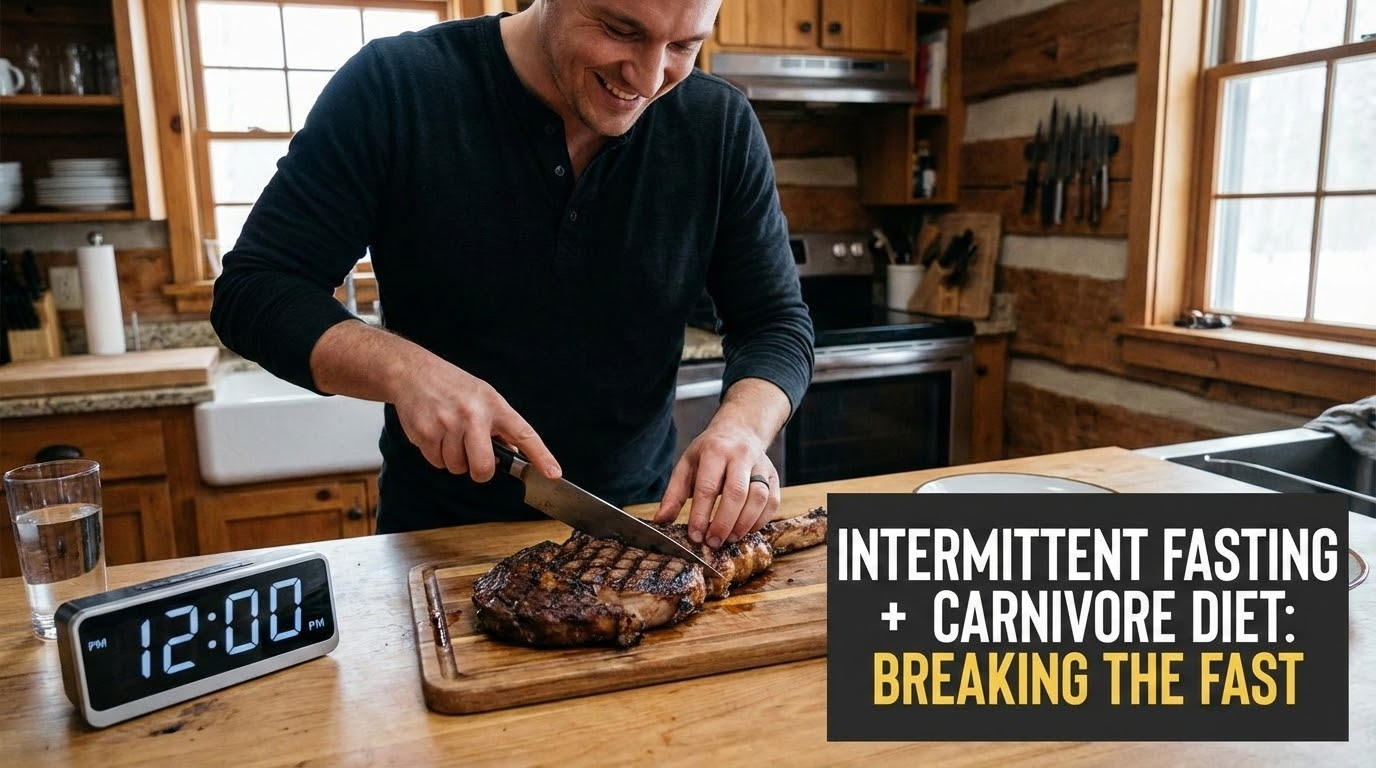
A highly detailed photorealistic image of a fit man in his 30s breaking his intermittent fast with a sizzling ribeye steak on a wooden plate, steam rising in golden hour sunlight filtering through a kitchen window, muscular build evident from recent weight loss, background shows a clock at 16:8 fasting end time, vibrant red meat juices, rustic wooden table with salt shaker, warm earthy tones, high contrast lighting emphasizing satisfaction and energy, cinematic composition with shallow depth of field, hyper-realistic textures on meat marbling, motivational mood for fasting for weight loss success.
What Is the Carnivore Diet?
Historical Roots and Ancestral Connections
The carnivore diet isn’t some modern fad—it’s rooted in how humans ate for millennia. Think hunter-gatherer diet, where tribes like the Inuit or Maasai survived almost exclusively on animal foods, showing no signs of scurvy or deficiencies despite zero plants. These groups consumed nose-to-tail: organs, bone marrow, fatty cuts, proving the body adapts to meat-heavy fuel.
Fast forward to today, and it’s rebranded as the all-meat diet or zero carb diet. Pioneers like a certain orthopedic surgeon popularized it by documenting personal feats of strength on steak alone. This ancestral diet strips away processed junk and plant toxins, focusing on bioavailable nutrients from beef, lamb, pork, fish, eggs, and butter.
Why does it resonate now? In our carb-saturated world, it flips the script on metabolic chaos from sugar spikes. Surveys show adopters motivated by weight loss or chronic issues find relief fast.[1] But it’s strict—no cheating with salads or berries.
Core Principles and Food List
At its heart, the carnivore diet means animal products only. Prioritize ruminant meats like ribeye or ground beef for optimal fats. Fatty fish like salmon pack omega-3s, while eggs deliver choline for brain health. Some include cheese or heavy cream, but purists stick to meat and water.
A typical day: breakfast of bacon and eggs, lunch fatty brisket, dinner pork ribs. Salt to taste, maybe bone broth for minerals. No counting calories—just eat till satisfied. This whole foods approach eliminates fiber, carbs, and plant antinutrients like lectins or oxalates, which some blame for gut woes.
Variations exist: lion diet limits to ruminants, or nose-to-tail for full nutrition. Blending with fasting for weight loss amps autophagy, where your body cleans house during meatless windows.
Mechanisms: Why Meat Fuels You
Meat provides complete proteins with all essential amino acids, unlike incomplete plant sources. It’s packed with B vitamins, zinc, iron, and creatine—nutrients often low in vegans. Fat from animals supplies steady ketones, mimicking fasting states for fat burn.
Without carbs, insulin stays low, unlocking fat stores. Gut rest from zero fiber reduces bloating for many. A nutrient analysis showed shortfalls in C and magnesium but questioned if meat-adapted metabolism lowers needs.[5] Historical Inuit thrived sans vitamin C, suggesting adaptation.
This shift to animal-based diet reprograms hunger signals, curbing overeating. Users report sustained energy sans crashes. For metabolic health, it’s a reset button.
Benefit One: Dramatic Weight Loss
How It Sparks Rapid Fat Burning
One of the biggest draws of the carnivore diet is effortless weight loss, often twenty to fifty pounds in months. By slashing carbs to zero, your body enters deep ketosis, burning fat for fuel like during prolonged fasting. No plants means no hidden sugars or fillers—just satiating protein and fat that kill hunger.
Mechanism-wise, low insulin from zero carbs signals lipolysis, where fat cells release glycerol and fatty acids. Your liver converts them to ketones, powering brain and muscles. This mirrors fasting for weight loss, amplifying results when combined. Studies on low-carb diets show superior fat loss over calorie restriction.[1]
Hormonally, it boosts leptin sensitivity, the fullness hormone dulled by carb overload. Adherents drop BMI fast; one survey saw median BMI fall from overweight to normal.[1] It’s not magic—it’s metabolic efficiency.
Research and Real Data
A survey of over two thousand carnivores reported substantial BMI reductions, with diabetics losing even more.[1] Participants motivated by obesity saw marked improvements, aligning with keto research where low-carb trumps low-fat for weight loss. Another analysis noted benefits for chronic conditions, hinting at metabolic perks.[5]
Short-term trials echo this: meat-heavy diets reduce body fat while preserving muscle, thanks to high protein. Critics note self-reported bias, but consistency across thousands suggests truth.[1] Long-term? Needs more study, but early signs shine.
User Stories and Case Studies
Take Joe, a 45-year-old dad who ballooned to 250 pounds on standard carbs. Switching to carnivore, he shed 60 pounds in six months, pants falling off without gym obsession. “Energy soared, no more snacks,” he shares. Similarly, Sarah battled PCOS and insulin resistance; carnivore dropped her thirty pounds, regulating cycles naturally.
Online forums buzz with tales: one woman lost 100 pounds, reversing pre-diabetes. A hypothetical but realistic case: Mark, office worker, combines with 16:8 intermittent fasting, dropping 40 pounds in 90 days. These aren’t outliers—surveys confirm widespread success.[1]
Week-by-Week Timeline
Week one: water weight whooshes off, five to ten pounds gone from glycogen depletion. Week two: keto flu hits but passes, fat burn ramps. By month one, steady one to two pounds weekly. Months two to three: inches melt from waist as visceral fat targets. Long-term, maintenance mode stabilizes at lean mass.
Tips to Maximize Weight Loss
Eat fatty cuts till full, prioritize beef suet for calories. Track ketones with strips initially. Pair with walking or weights for muscle spare. Hydrate heavily, salt food generously to dodge electrolyte dips. Avoid dairy if stalls hit—it’s sneaky carbs for some.
For supercharge, add one-day water fasts weekly, blending carnivore with fasting for weight loss protocols. Monitor progress with photos, not scale, as muscle builds.
Benefit Two: Improved Mental Clarity
Brain Fuel from Ketones
Carnivore diet users often describe laser focus and mood lifts, like fog lifting after years. Zero carbs force ketone production, a super-fuel for neurons outperforming glucose. Brains run cleaner on fats, ditching sugar rollercoasters.
Mechanism: ketones bypass glucose transporters, providing steady energy. They boost BDNF for neuron growth, fighting depression. Inflammation drops sans plant oxalates, clearing mental haze. Anecdotes abound of anxiety melt and productivity spikes.[1]
This ties to ancestral diet—hunter-gatherers needed sharp wits for survival on meat alone.
Studies Supporting Cognitive Gains
While carnivore-specific research is nascent, ketogenic studies show cognitive boosts in epilepsy and Alzheimer’s. The big carnivore survey noted mental well-being improvements across the board.[1] Diabetics reported sharper focus post-HbA1c drops.
Emerging data challenges old fears, suggesting saturated fats support myelin sheaths for faster signaling.[5]
Real Experiences
Emily, a lawyer, struggled with brain fog from IBS. Carnivore cleared it in weeks: “I crush cases now, no afternoon slump.” Tech bro Alex ditched Adderall, crediting steak-fueled ketones. Case study: veteran with PTSD found calm, sleeping deeper on ribeyes.
Practical Optimization
Eat nose-to-tail for brain nutrients like liver’s DHA. Time meals post-fast for ketone peaks. Supplement electrolytes if foggy. Track mood journals to correlate.
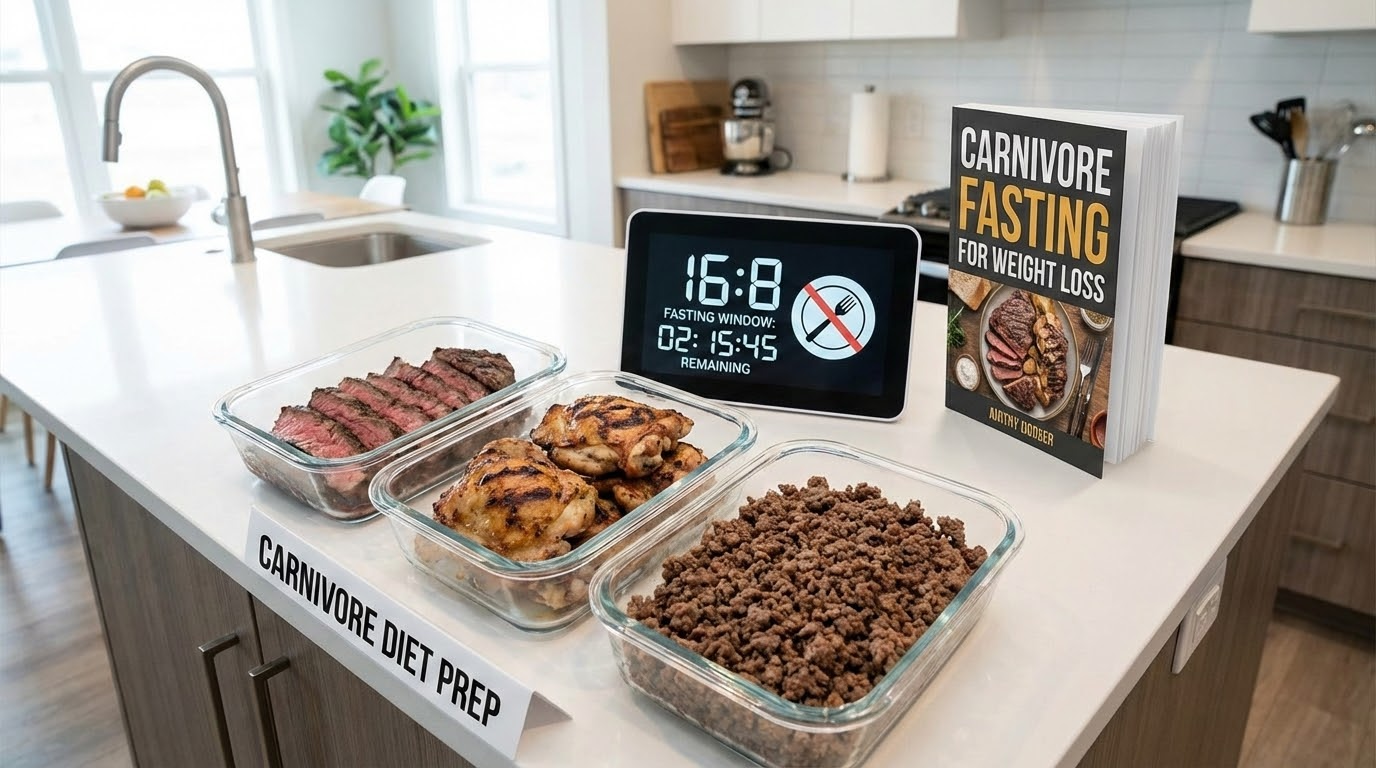
Photorealistic scene of a woman preparing carnivore meals for intermittent fasting for weight loss, chopping fatty brisket and bacon on a marble counter, digital clock showing 18-hour fast complete, diverse meats arranged artfully with eggs and butter, soft morning light through window casting shadows, empowering vibe with measuring tape nearby showing progress, cool blue tones shifting to warm meat hues, detailed textures on glistening fat caps, wide-angle composition capturing motivation and discipline, high-resolution 8k style.
Benefit Three: Reduced Inflammation
Eliminating Plant Toxins
Over half of carnivores start for inflammation or autoimmunity, reporting swift relief.[1] Dropping plants removes lectins, saponins, and oxalates that irritate guts and trigger flares.
How? These compounds poke holes in intestines, sparking systemic inflammation. Meat lacks them, allowing healing. Ketosis adds anti-inflammatory beta-hydroxybutyrate, calming cytokines. Gut microbiome simplifies, favoring meat-digesters.
Users with rheumatoid arthritis or psoriasis see skin clear, joints ease.
Evidence from Surveys and Trials
The PMC survey highlighted improvements in allergic, skin, and autoimmune conditions.[1] Another review noted potential for chronic management, though plant-free claims need more RCTs.[5] Contrasting critics, inflammation markers often normalize.[1]
Testimonials and Examples
Tom’s eczema vanished in a month on beef-only. Hypothetical: Lisa with Crohn’s ditched meds after 90 days, stools firming sans fiber. Forum fave: ex-athlete reversed tendonitis, back to marathons.
Timeline and Tips
Weeks one to two: bloating fades. Month one: joint pain dips. Maximize with organ meats for glycine, an anti-inflammatory. Avoid processed meats. Pair with bone broth fasts for gut repair.
Vs Other Anti-Inflammatory Diets
| Diet | Pros | Cons |
|---|---|---|
| Carnivore | Zero irritants, rapid relief | No fiber |
| Keto | Moderate plants | Slower results |
| Paleo | Whole foods | Plant toxins linger |
Benefit Four: Better Blood Sugar Control
Stabilizing Glucose Naturally
For diabetics, carnivore shines: medication reductions, HbA1c plunges.[1] No carbs mean no spikes, insulin sensitivity rebounds.
Mechanism: gluconeogenesis from protein covers needs sans excess. Fat buffers, preventing lows. Survey diabetics lost more weight, cut insulin dramatically.[1]
Key Studies
Over two thousand respondents showed diabetes perks.[1] Aligns with low-carb meta-analyses outperforming standard care.
Case Studies
Mike reversed type two in 120 days, off metformin. Woman with prediabetes normalized fasting glucose to 85.
Tips and Timeline
Test blood sugar daily first month. Eat post-fast for synergy. Fatty meats prevent gluconeogenesis overkill.
Benefit Five: Simplified Eating Habits
Effortless Routine
No meal prep drama—just grill and eat. High satiety means fewer decisions, freeing mental energy.
Satisfaction rates sky-high in surveys.[1] Ancestral simplicity shines.
User Feedback
“Grocery runs take ten minutes,” says one. Busy mom: kids eat same plate, family bonds.
Implementation
Batch cook weekly. Travel with jerky. Sustainable long-term for many.
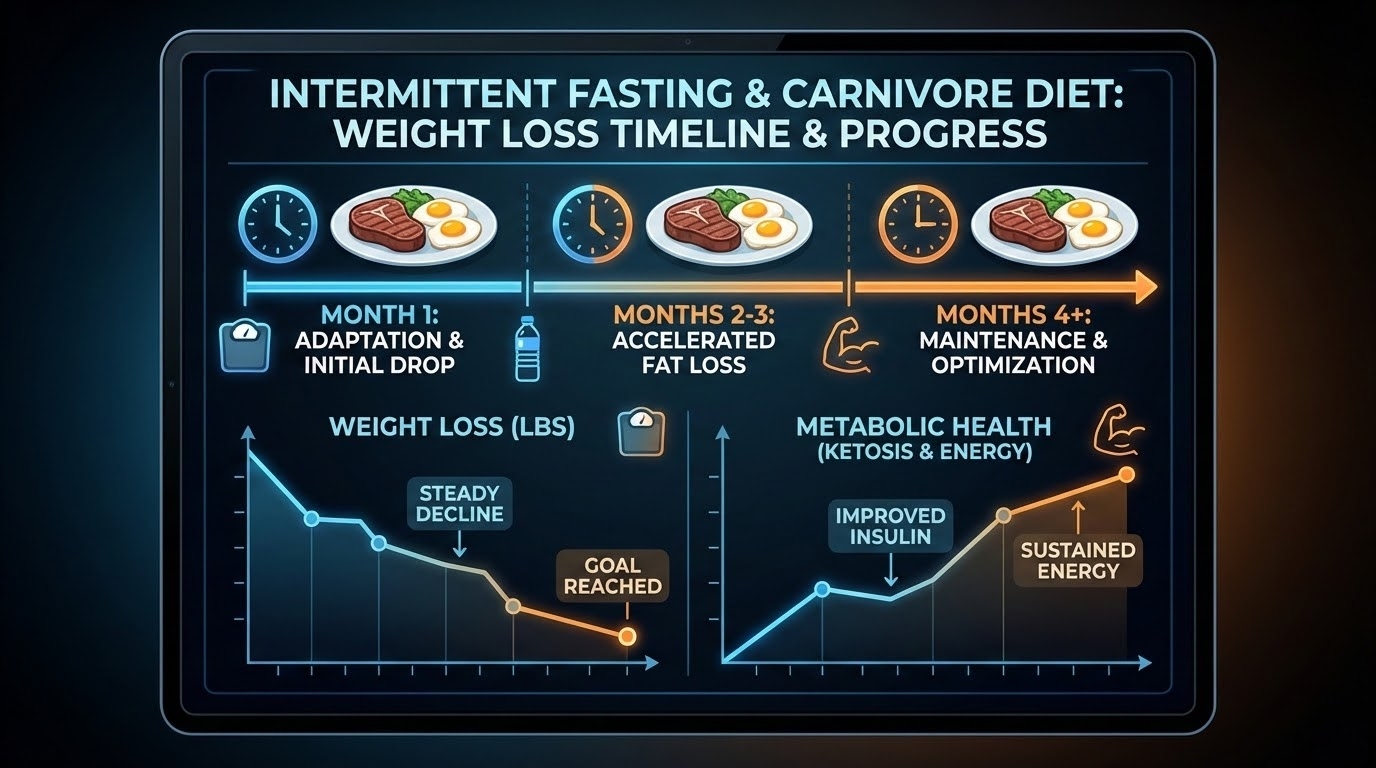
Detailed infographic-style image of a 12-week intermittent fasting for weight loss journey on carnivore diet, muscular person transforming from overweight to lean, weekly milestones with steak icons and fasting timers, graph showing dropping weight curve, vibrant colors green to red for progress, background savanna evoking hunter-gatherer roots, dynamic lighting with spotlights on key weeks, realistic human figure with before-after split, motivational text overlays like ‘Week 4: 20lbs down’, ultra-high detail, illustrative yet photorealistic fusion.
Key Risks and Potential Downsides
Nutrient Shortfalls
Critics flag low vitamin C, magnesium, fiber.[2][5] Inuit adapted, but modern guts may struggle. Scurvy rare, but supplement if needed.
Analysis showed thiamin, calcium gaps.[5] Monitor with bloodwork.
Heart Health Concerns
Red meat may hike LDL.[2][3] No fiber risks constipation, microbiome shifts.[4] Kidney stress from protein possible.
Surveys counter with few issues.[1] Context matters—lean genetics fare better.
Gut and Long-Term Issues
Fiber void causes initial diarrhea or constipation.[2] Cancer links to processed meats debated.[3] Colon risks noted.
Mitigation Strategies
Nose-to-tail eating covers bases. Electrolytes daily. Consult doc, especially with conditions. Cycle if bored.
Visit Mayo Clinic on diets for balance. See PubMed studies.[1]

Vivid realistic image of a middle-aged man discussing carnivore diet and intermittent fasting for weight loss with a doctor in modern clinic, charts showing improved labs on table, steak diagram and fasting schedule visible, optimistic expressions, natural daylight from window highlighting healthy glow post-transformation, detailed medical tools and stethoscope, warm reassuring colors, close-up composition focusing on conversation, photorealistic skin textures and fabric folds, inspirational health journey mood.
Scientific Evidence Overview
Strengths and Limitations
Limited RCTs, but surveys robust: health benefits, satisfaction high.[1] Nutrient study flags gaps but adaptation possible.[5]
Critics cite heart risks, gut dysbiosis.[2][3][4] Balanced view: promising for metabolic ills, monitor lipids.
Comparison Table
| Aspect | Carnivore | Standard Diet |
|---|---|---|
| Weight Loss | High[1] | Moderate |
| Inflammation | Reduced[1] | Variable |
| Nutrients | Gaps[5] | Balanced |
Check Healthline review, WebMD.
Combining Carnivore with Fasting for Weight Loss
Synergistic Effects
Pairing carnivore with intermittent fasting supercharges fat loss. 16:8 windows let ketosis deepen, autophagy peaks.
Step-by-step: fast 16 hours, break with fatty meat. Hunters fasted naturally. Users report doubled drops.
Timeline
Week one: adapt. Month one: twenty pounds. Enhance with electrolytes.
Cautions
Ease in, watch kidneys. Great for insulin resistance.
Practical Implementation Guide
Getting Started Steps
- Stock freezer with ribeyes, organs.
- Day one: all meat, salt heavy.
- Track symptoms weekly.
- Bloodwork at one, three months.
Internal links: Keto Basics, Fasting for Weight Loss, Ancestral Diet, Zero Carb Recipes.
Troubleshooting
Diarrhea? Less fat. Fatigue? More salt. Stalls? Fast day.
Frequently Asked Questions
Is the Carnivore Diet Safe Long-Term?
Surveys say yes for most, but monitor nutrients.[1] Docs recommend checkups.
Can I Do Carnivore While Pregnant?
Consult pro; nutrient focus key.
How to Avoid Constipation on Carnivore?
Bone broth, movement. Some add minimal fat.
Does Carnivore Raise Cholesterol?
Some LDL up, but context vital.[3][1]
Best Meats for Beginners?
Ground beef, eggs—easy, cheap.
Combine with Exercise?
Yes, strength training preserves muscle.
Kids on Carnivore?
Monitor growth; doc first.
Exit Strategy?
Slow reintro plants if desired.
Internal: All-Meat Recipes, Diabetes Diet Tips.