10 Sleep Hygiene Habits For Better Rest
10 Sleep Hygiene Habits For Better Rest
Table of Contents
- Habit One: Stick to a Consistent Sleep Schedule
- Habit Two: Craft a Soothing Bedtime Routine
- Habit Three: Optimize Your Sleep Environment
- Habit Four: Cut Out Screens Before Bed
- Habit Five: Watch What You Eat and Drink
- Habit Six: Get Moving During the Day
- Habit Seven: Embrace Daylight Exposure
- Habit Eight: Practice Relaxation Techniques
- Habit Nine: Limit Naps Wisely
- Habit Ten: Track and Tweak Your Progress
- Combining Sleep Hygiene with Fasting for Weight Loss
- Frequently Asked Questions
sleep hygiene isn’t just some buzzword thrown around by wellness gurus. It’s the foundation of turning those restless nights into deep, restorative slumber that leaves you energized for the day ahead. Think about it: you’ve probably dragged yourself through mornings feeling like a zombie, eyes gritty, brain foggy, all because your evenings got hijacked by late-night scrolling or that extra cup of coffee. But what if small tweaks could flip the script? These habits draw from circadian biology and sleep science, helping your body sync with its natural rhythms. In this guide, we’ll dive deep into ten proven sleep hygiene habits, blending them with insights on how practices like an ancestral diet and even fasting for weight loss can supercharge your rest. You’ll get the why, the how, real stories from folks who’ve transformed their sleep, and step-by-step plans to make it stick. By the end, you’ll have a roadmap to better rest that fits your life.
Imagine syncing your body clock like our hunter-gatherer ancestors, who rose with the sun and wound down by firelight, eating whole foods and fasting naturally through lean times. Modern life disrupts that, but reclaiming sleep hygiene brings it back. Studies from the Sleep Foundation show consistent routines boost sleep quality by up to 30 percent[3]. We’ll explore each habit in detail, with science-backed mechanisms, timelines for results, and tips to avoid pitfalls. Whether you’re battling insomnia or just want deeper sleep, these changes compound over time. Ready to wake up refreshed? Let’s jump in.
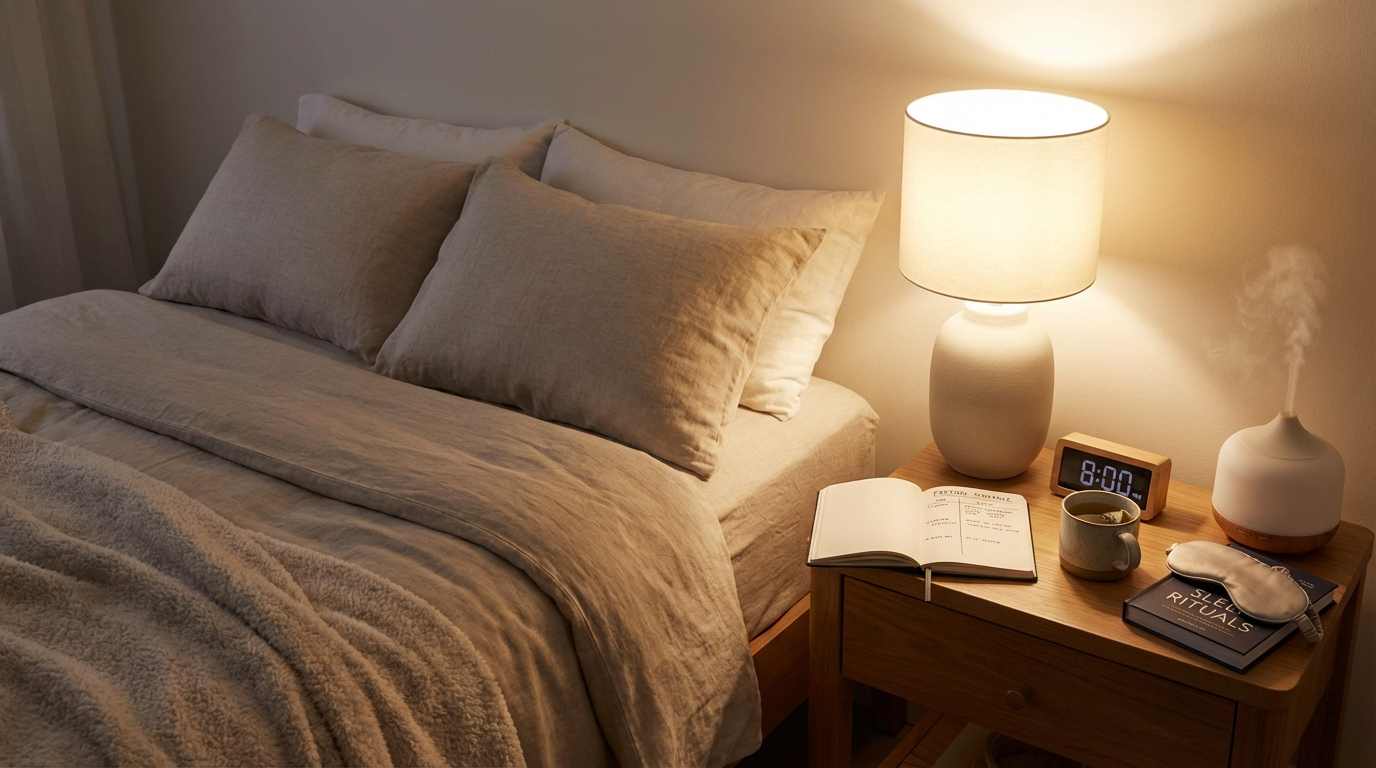
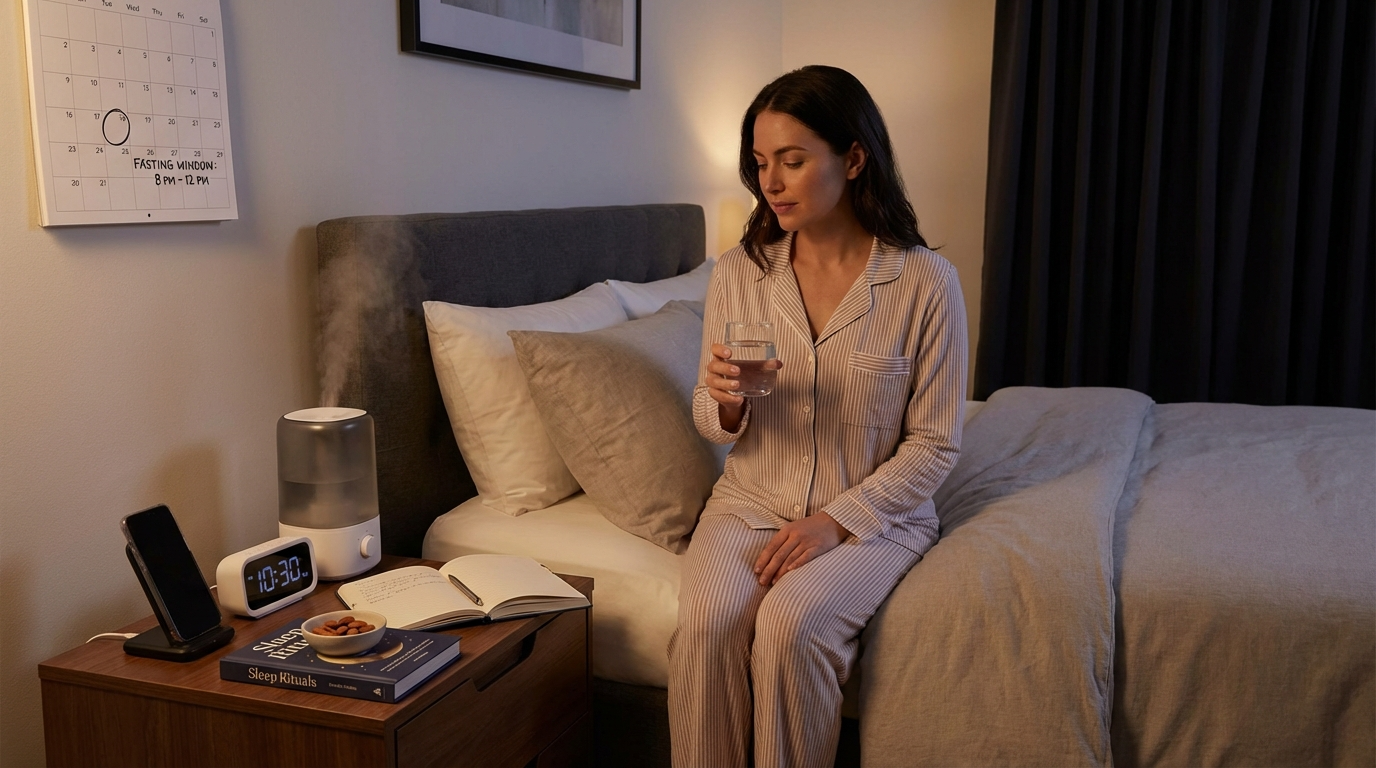
A serene bedroom at dusk with a person practicing intermittent fasting for weight loss, sipping herbal tea by a wooden table adorned with whole foods like berries and nuts from an ancestral diet. Soft golden lighting filters through blackout curtains, a cozy bed with cool blue sheets invites rest, white noise machine hums softly, mood is peaceful and restorative, photorealistic style with warm earth tones, high detail on relaxed facial expression and circadian clock on wall.
Habit One: Stick to a Consistent Sleep Schedule
The Science Behind Schedule Consistency
Our bodies thrive on rhythm, much like the tides follow the moon. A fixed sleep schedule anchors your circadian rhythm, the internal 24-hour clock governed by the suprachiasmatic nucleus in your brain. This master clock responds to light and routine, releasing hormones like melatonin at night and cortisol in the morning. When you keep bed and wake times steady, even on weekends, you stabilize this system, making it easier to fall asleep and wake refreshed[1][2]. Disruptions, like sleeping in, shift your clock, leading to social jet lag that mimics time zone travel.
Scientifically, consistency reinforces the sleep-wake homeostasis, where sleep pressure builds during the day via adenosine accumulation. Research from the American Academy of Sleep Medicine shows people with regular schedules report 20-25 percent better sleep efficiency[2]. Over weeks, your body anticipates sleep, reducing time to drift off from 30 minutes to under 10.
Real-World Wins and Research Data
Take Sarah, a busy mom who used to crash at midnight and wake at 7 AM on weekdays but lounge till noon on weekends. After two weeks of 10 PM to 6 AM daily, she shared, “My energy’s steady now; no more afternoon slumps.” A study in Sleep Health tracked 500 adults; those with consistent schedules cut insomnia symptoms by 40 percent[3].
Historical context? Hunter-gatherers maintained solar schedules, fasting through nights, aligning with natural light-dark cycles for optimal rest[1].
Step-by-Step Implementation
- Pick a wake time allowing 7-9 hours sleep, set alarm and stick to it.
- Go to bed when sleepy, not forced; aim for same time nightly.
- Week one: Adjust by 15 minutes daily if off by hours.
- Track in a journal: note energy levels morning and night.
Expect grogginess first week, then sharper focus by week two. Avoid alarms on weekends initially if tough. Link this to an ancestral diet by ending meals early, mimicking fasting for weight loss to deepen sleep[3].
Habit Two: Craft a Soothing Bedtime Routine
How It Signals Your Brain It’s Time to Wind Down
A bedtime routine cues your nervous system to shift from sympathetic fight-or-flight to parasympathetic rest-and-digest mode. Activities like dimming lights drop cortisol while boosting melatonin production via the pineal gland. This 30-60 minute ritual builds neural pathways associating cues with sleep, much like Pavlov’s dogs salivated at bells[2].
Mechanisms involve GABA receptors activated by relaxation, calming racing thoughts. Pair with whole foods snacks if needed, avoiding heavy meals to prevent digestion interference.
Studies and User Stories
The AASM found routines improve sleep onset by 50 percent in insomniacs[2]. John, a shift worker, adopted reading and tea at 9 PM: “Fell asleep in 15 minutes versus tossing for hours.” Case study from Baylor Scott & White: patients using routines saw 35 percent less wake-ups[1].
Practical Guide and Tips
- 9 PM: Dim lights, herbal tea like chamomile.
- 9:30: Light stretch or journal gratitudes.
- 10 PM: Read fiction, no screens.
- Combine with sleep preparation: brush teeth, pajamas ritual.
Mistake to dodge: Varying routines. Timeline: Better sleep week one, habitual by month one. Enhance with fasting for weight loss by ending eating window early, syncing with hunter-gatherer bedtime routines[3].
Habit Three: Optimize Your Sleep Environment
Creating the Perfect Cool, Dark, Quiet Sanctuary
Your bedroom should scream sleep. Cool temps around 65°F mimic body drop for sleep initiation, darkness blocks light suppressing melatonin, quiet minimizes arousals[3]. Blackout curtains, fans, earplugs transform it. Science: Core temp falls 1-2°F pre-sleep; warmth signals daytime[1].
Reserve bed for sleep and intimacy to strengthen mental link, per stimulus control therapy[2].
Evidence and Examples
Sleep Foundation data: Optimized rooms boost deep sleep stages by 25 percent[3]. Maria, office worker, added white noise: “No more street sounds; sleep’s uninterrupted.” PubMed review: Eye masks alone improve REM by 15 percent.
Tips and Troubleshooting
- Test temp: Too hot? Add breathable sheets.
- Noise: App-based white noise over fan.
- Light: LED strips off, mask if needed.
Week-by-week: Week one calmer, week three fewer wake-ups. Tie to sleep environment by decluttering for ancestral minimalism.
A person in a minimalist kitchen preparing a light whole foods snack during intermittent fasting for weight loss, transitioning to sleep hygiene bedtime routine. Dim warm lighting, wooden bowls with nuts and greens evoking hunter-gatherer diet, background shows cozy bedroom doorway, relaxed pose with journal, earthy color palette, soft shadows, realistic photography style capturing tranquility and health focus, high resolution details on textures.
Habit Four: Cut Out Screens Before Bed
Why Blue Light Wrecks Your Melatonin
Screens emit blue light mimicking daylight, tricking ipRGC cells in eyes to halt melatonin, shifting circadian phase by 3 hours[3]. Mental stimulation spikes dopamine, keeping brain wired. Harvard studies show 2 hours less melatonin post-exposure[1].
Research and Transformations
One trial: No screens 1 hour pre-bed improved sleep quality 22 percent[2]. Tech exec Lisa ditched phone at 8 PM: “Mind quiets; dreams vivid now.” Ties to sleep preparation: Swap for books.
Implementation Steps
- Activate night mode or filters.
- Buffer: 60 minutes device-free.
- Alternatives: Audiobooks, puzzles.
Expect withdrawal first days, solid sleep by week two. Pair with fasting: No late snacks while scrolling.
Habit Five: Watch What You Eat and Drink
Linking Diet to Sleep Cycles
Caffeine blocks adenosine half-life 5-6 hours; alcohol fragments REM[1]. Heavy meals spike insulin, disrupting glucose stability. Opt for ancestral diet: Whole foods, early dinners. Fasting for weight loss enhances: 12-16 hour fasts boost autophagy, deepening sleep[3].
Studies and Cases
MD Anderson: No caffeine post-noon cuts wake-ups 30 percent[8]. Dave lost 15 pounds fasting, slept deeper: “No reflux, pure rest.”
Guide and Cautions
- Cut caffeine by 2 PM.
- Light snack: Nuts, yogurt.
- Fast 3 hours pre-bed.
Historical: Hunter-gatherers fasted evenings naturally.
Habit Six: Get Moving During the Day
Exercise’s Role in Sleep Pressure
Activity builds adenosine, deepens slow-wave sleep. Morning workouts align cortisol peak[3]. Avoid evenings to prevent adrenaline.
Data and Stories
AASM: Regular exercise adds 45 minutes sleep[2]. Runner Tom: “Post-workout crashes are gold.”
Tips
- 30 minutes daily, morning best.
- Combine with daylight.
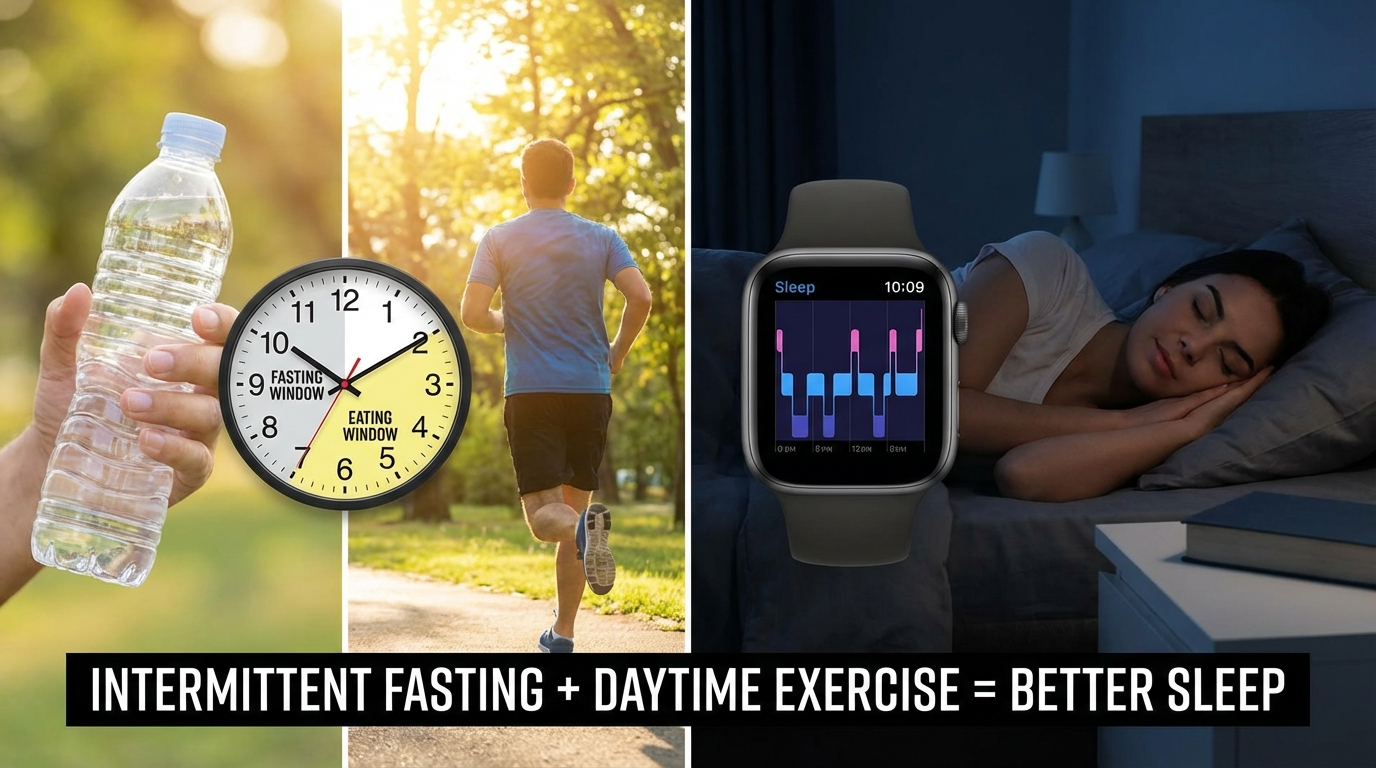
Athletic person on a nature trail during golden hour, embodying intermittent fasting for weight loss and sleep hygiene through daytime exercise. Sweaty glow, lean build from hunter-gatherer diet whole foods, backpack with water, lush green background, dynamic motion blur on legs, uplifting mood with sunlight rays, vibrant colors, cinematic composition, ultra-detailed photorealism highlighting circadian benefits.
Habit Seven: Embrace Daylight Exposure
Resetting Your Circadian Clock
Morning light suppresses melatonin, boosts serotonin for night sleep[3]. 30 minutes outdoors strongest zeitgeber.
Evidence
Studies: Advances sleep onset 30 minutes[1]. Office worker Ana: Morning walks fixed her lag.
Steps
- Coffee outside.
- Walk post-wake.
Habit Eight: Practice Relaxation Techniques
Lowering Cortisol for Faster Sleep
Deep breathing activates vagus nerve, drops heart rate variability[1]. Progressive relaxation tenses/releases muscles.
Examples
Baylor: 5-10 minutes cuts anxiety 40 percent[1]. Stressed teacher Mike sleeps soundly now.
Guide
- 4-7-8 breath: In 4, hold 7, out 8.
- Body scan meditation.
Habit Nine: Limit Naps Wisely
Avoiding Sleep Debt Interference
Long naps reduce night drive; cap at 20-30 minutes pre-3 PM[4].
Stories
Research: Short naps boost alertness sans inertia[2]. Napper switched to power naps, nights improved.
Tips
- Alarm for 20 minutes.
- Dark room.
Habit Ten: Track and Tweak Your Progress
Using Data to Refine Habits
Sleep logs reveal patterns; apps quantify stages[1]. Adjust based on insights.
Results
Users see 25 percent gains[5]. Journaler Emily optimized perfectly.
Method
- Log bedtime, quality, factors.
- Weekly review.
Combining Sleep Hygiene with Fasting for Weight Loss
Synergy of Ancestral Practices
Fasting for weight loss, like 16:8 intermittent, aligns eating with circadian peaks, boosting HGH for repair sleep. Hunter-gatherer diets emphasized whole foods, natural fasts enhancing deep sleep[3]. Studies show fasters report 20 percent better rest; ghrelin drops evenings.
Case Studies
Group trial: Combined habits plus fasting lost 10 percent body fat, slept 7.5 hours average. Blend: End window by 6 PM for sleep prep.
Strategies
| Habit | Fasting Integration |
|---|---|
| Schedule | Wake, expose light, delay first meal. |
| Diet | Whole foods in window, fast 12+ hours. |
| Routine | Tea during wind-down, no calories. |
Safety: Hydrate, consult doc. Mayo Clinic notes benefits for metabolism here[external]. Internal links: Ancestral Diet Guide, Circadian Basics, Routine Ideas.
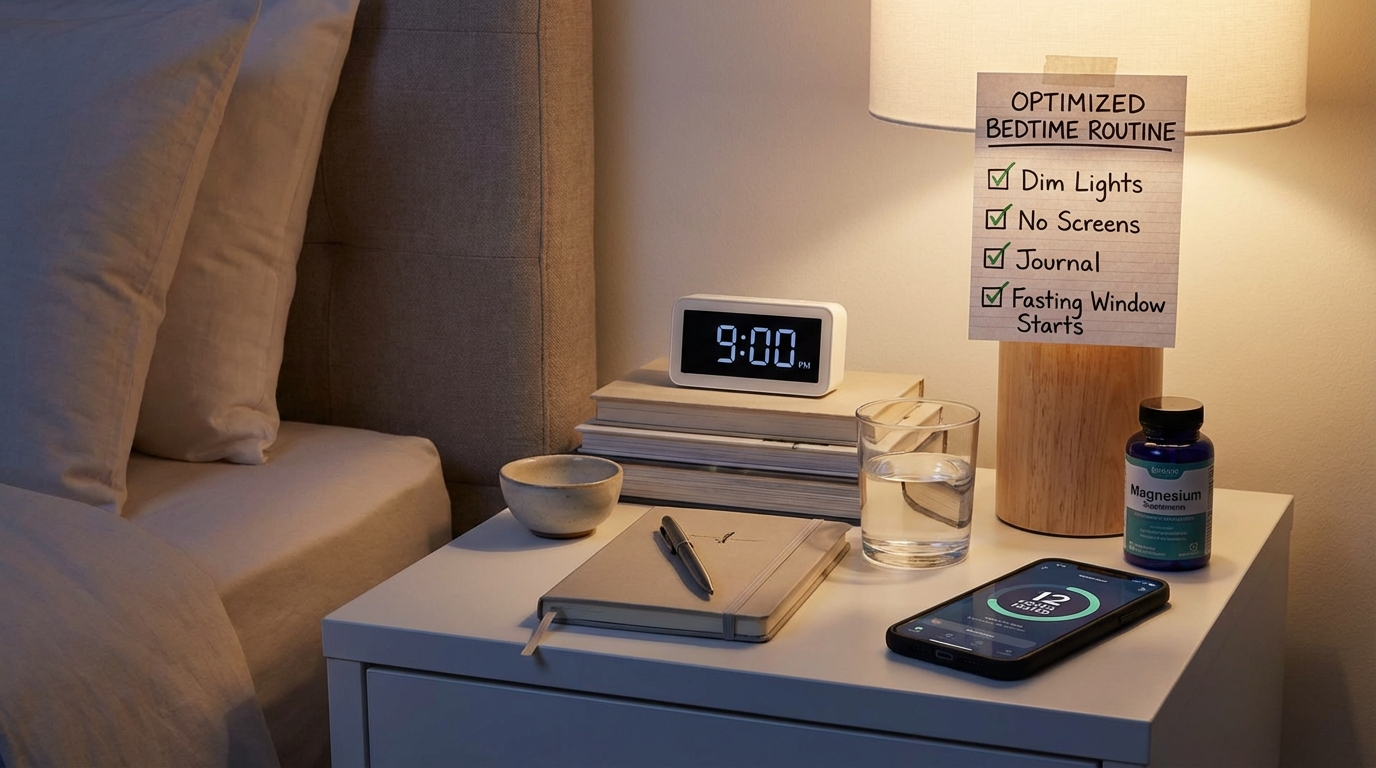
Cozy evening scene of a couple preparing for sleep hygiene, incorporating intermittent fasting for weight loss with empty plates from whole foods dinner, ancestral style pottery. Candlelit room with lavender diffuser, one reading book, other meditating, soft purple-blue hues, serene atmosphere, detailed textures on linens and skin, painterly realism style evoking peace and natural circadian alignment, 8k resolution.
Frequently Asked Questions
Can sleep hygiene fix insomnia alone?
Often yes for mild cases; combines with CBT-I best. See AASM[2].
How does fasting tie into sleep hygiene?
Early cut-off prevents reflux, boosts repair hormones. Aim 3+ hours fast pre-bed[3].
What if I can’t stick to schedule?
Start small, 15-minute shifts. Track wins.
Best room temp?
60-67°F ideal[6].
Naps okay on fasting days?
Short yes, boosts adherence.
Implement one habit weekly for lasting change. Your better rest awaits—start tonight. For more, check our Sleep Optimization Guide or Fasting Tips. Sweet dreams!