Intermittent Fasting Methods Compared – 5 Powerful Strategies Revealed
Table of Contents
5 Intermittent Fasting Methods Compared – Discover Which One Transforms Your Health
So you’ve heard everyone raving about intermittent fasting and you’re sitting there wondering which method is actually gonna work for YOUR life, right? With all the different approaches floating around – from the popular 16/8 fasting to the intense OMAD diet – figuring out where to even start can feel pretty overwhelming.
Here’s the deal though – intermittent fasting isn’t some rigid one-size-fits-all thing where you’re stuck following rules that make you miserable. It’s actually super flexible, and theres probably a time-restricted eating pattern that’ll click perfectly with your schedule, goals, and lifestyle. The trick is understanding what each method actually involves and which one matches up with how you wanna live your life.
In this comprehensive comparison, we’re gonna break down five of the most popular and researched intermittent fasting methods, look at what the science really says about each approach, and help you figure out which one deserves your attention. No BS, no hyped-up claims – just real talk about what works, what doesn’t, and who each method is actually best suited for.
What Makes Intermittent Fasting Different From Regular Dieting
Before we dive into comparing specific methods, lets get super clear on what intermittent fasting actually is and why it’s become such a massive trend in health and wellness spaces lately.
Unlike traditional diets that obsess over every calorie and make you weigh your food like you’re running a science experiment, time-restricted eating focuses on WHEN you eat rather than exactly WHAT you eat. You’re essentially cycling between periods of eating and periods of fasting in a repeating pattern that your body can adapt to.
According to research from the Sleep Foundation and major health institutions, when you fast for extended periods, some pretty remarkable metabolic changes happen inside your body. Your insulin levels drop significantly, making it way easier for your body to access stored fat for energy. At the same time, cellular repair processes like autophagy kick into high gear – basically your cells start cleaning out damaged components and regenerating themselves.
A comprehensive network meta-analysis published in the BMJ found that various intermittent fasting approaches delivered measurable improvements in body weight, glucose control, and cardiometabolic risk factors across different populations. But here’s where it gets interesting – different methods produced varying levels of effectiveness depending on which specific health outcomes researchers measured.
Method One: The 16/8 Fasting Approach – The Crowd Favorite
Lets kick things off with probably the most talked-about and beginner-friendly method out there – 16/8 fasting, sometimes called the Leangains protocol.
How 16/8 Actually Works In Real Life
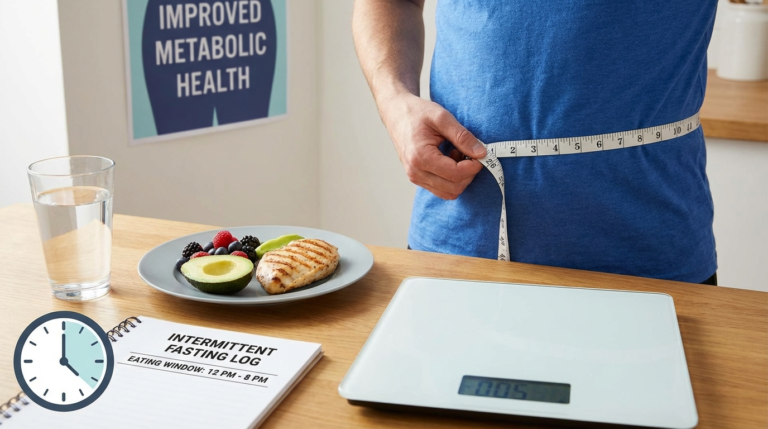
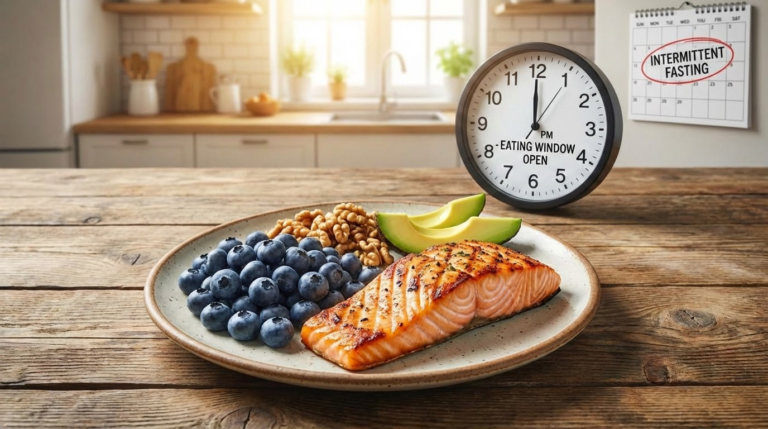
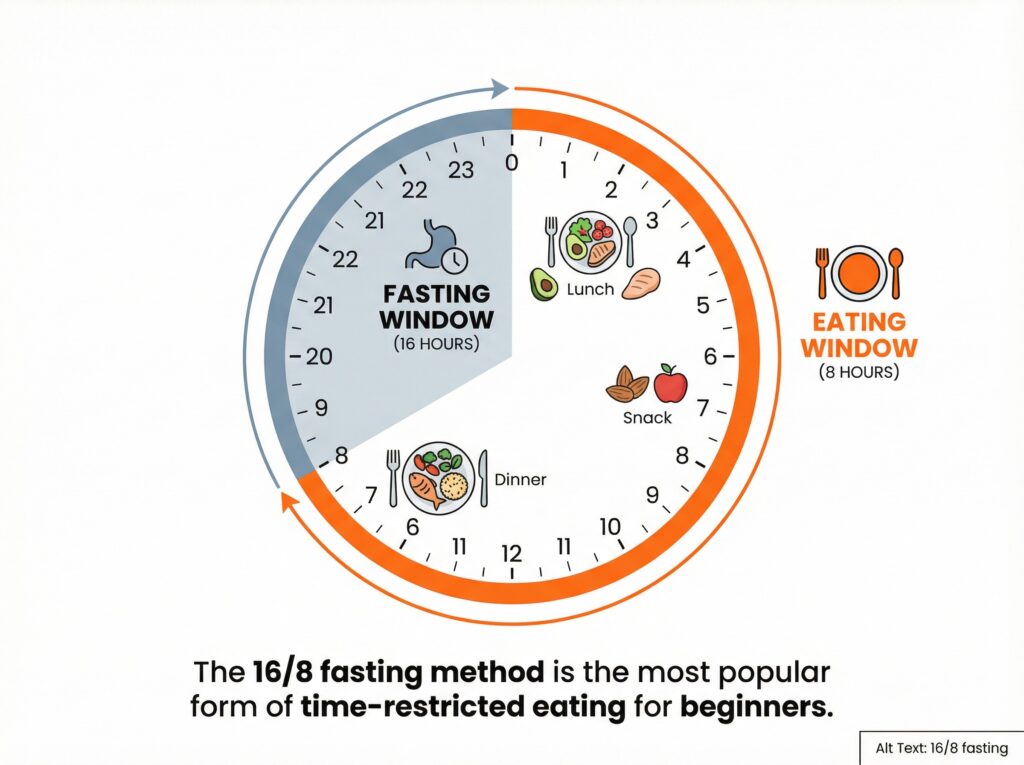
With this approach, you fast for sixteen hours each day and squeeze all your eating into an eight-hour window. Most people pull this off by skipping breakfast and eating their first meal around noon, then wrapping up dinner by 8pm. Though you could totally flip that around if you’re someone who genuinely loves breakfast and would rather skip dinner instead.
The genius of 16/8 fasting is its flexibility and sustainability factor. You’re basically just extending your overnight fast by a few extra hours, which doesn’t feel nearly as restrictive as some of the more extreme fasting methods out there. You can still eat multiple solid meals during your eating window, making it way easier to get adequate nutrition and maintain some semblance of a social life.
The Science Behind 16/8 Success
Recent research comparing different fasting protocols found that 16/8 fasting delivered consistent results for weight loss and metabolic health improvements. In one study with people who had Type 2 diabetes and obesity, participants following an eight-hour time-restricted eating window lost an average of 3.56% of their body weight over six months.
What makes this particularly impressive is that people weren’t required to obsessively count calories – the compressed eating window naturally led them to consume 200 to 500 fewer calories per day without feeling deprived or miserable. The adherence rates remained high even after twelve months, which is pretty remarkable considering how most diets crash and burn at long-term maintenance.
Studies also show that 16/8 fasting helps improve:
- Blood sugar control and insulin sensitivity throughout the day
- Cholesterol levels and cardiovascular health markers
- Mental clarity and cognitive function during fasting periods
- Consistent energy levels without the usual afternoon crashes
Who Should Jump Into 16/8 Fasting
This method is absolutely perfect for beginners who’ve never experimented with intermittent fasting before. It’s also ideal if you have an active lifestyle with regular exercise routines, social commitments that involve meals with friends or family, or you simply want a sustainable long-term approach rather than something extreme that’ll burn you out in three weeks.
The 16/8 method works particularly well for shift workers too because you can slide your eating window forward or backward each day to accommodate your changing schedule without completely derailing your fasting routine.
Method Two: The OMAD Diet – One Meal A Day Intensity
Now we’re stepping into more advanced territory with the OMAD diet – that’s “One Meal A Day” for those who haven’t stumbled across this acronym yet.
Understanding The OMAD Approach
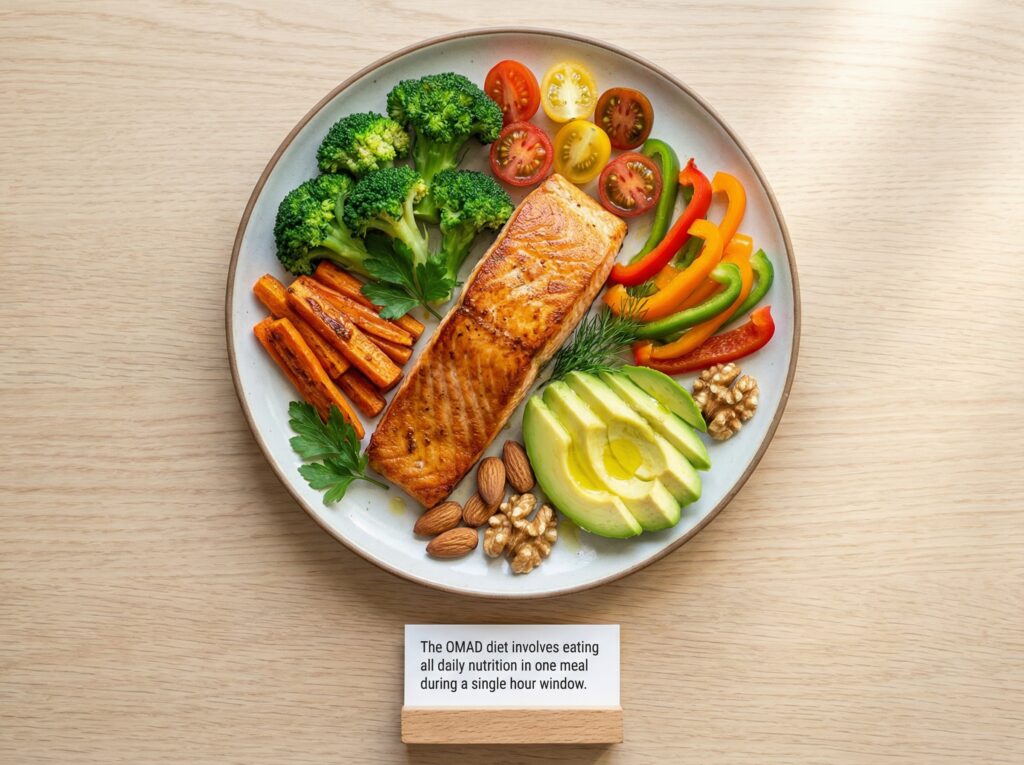
With OMAD, you’re fasting for a full twenty-three hours and eating all your daily calories within a single one-hour window. Yep, you read that correctly – just one meal per day, one hour to consume it. This is basically the most extreme form of time-restricted eating you can do while still eating daily.
Most OMAD practitioners choose to eat dinner as their single meal, which allows them to share that meal with family and maintain some degree of social normalcy. During the twenty-three hour fast, you can drink water, black coffee, unsweetened tea, and other zero-calorie beverages.
The Benefits And Reality Check Of OMAD
When practiced correctly with nutrient-dense whole food meals, OMAD can offer some pretty impressive benefits:
- Rapid visible weight loss – The restricted eating window naturally creates a substantial calorie deficit without requiring you to count every single calorie
- Enhanced mental clarity – Many practitioners report improved focus and productivity since they’re not dealing with post-lunch food comas
- Simplified meal planning – You literally only need to think about preparing one meal per day, which saves time and mental energy
- Improved insulin sensitivity – The extended fasting period can significantly enhance your body’s response to insulin
- Increased autophagy activation – Extended fasting triggers cellular cleanup and repair processes more intensely than shorter fasts
However, the OMAD diet definitely isn’t without its challenges and concerns. The biggest issue is getting adequate nutrition in just one meal. Common symptoms of nutrient deficiencies include night blindness, bleeding gums, persistent fatigue, and muscle weakness.
Is OMAD Right For Your Situation
The OMAD diet works best for experienced fasters who’ve already built up tolerance with less restrictive methods like 16/8 fasting. It’s also better suited for people with flexible schedules who work from home, since social eating becomes pretty challenging when you’re only eating once daily.
However, OMAD definitely isn’t appropriate for everyone. People with diabetes, eating disorder histories, pregnancy, or those taking medications that require food should avoid this approach without direct medical supervision.
Method Three: The 5:2 Diet Strategy – Weekly Flexibility Option
If daily fasting sounds too restrictive for your lifestyle, the 5:2 approach might be your perfect match for intermittent fasting success.
How The 5:2 Diet Actually Works
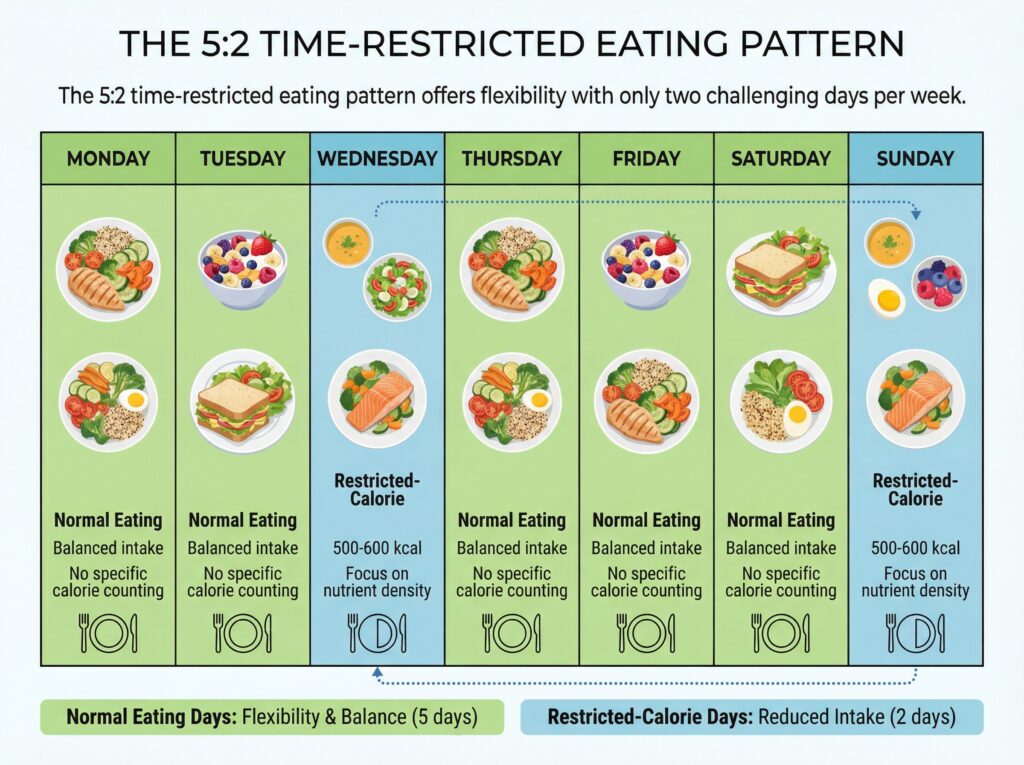
With this method, you eat normally for five days of the week and then dramatically reduce your calorie intake to just 500-600 calories on two non-consecutive fasting days. On those two “fast” days, you’re not completely avoiding food – you’re just eating about twenty-five percent of your usual caloric intake.
Most people spread their fasting days throughout the week – like maybe Tuesday and Thursday – to avoid having back-to-back low-calorie days that might completely tank your energy levels and make you feel miserable.
The Research Supporting 5:2 Effectiveness
Research published in the journal Nutrients found that the 5:2 programme was actually more effective for weight loss than traditional daily calorie restriction. Get this – 85.7% of people in the intermittent fasting 5:2 group lost more than five percent of their body weight, compared to only 58.5% in the daily calorie restriction group.
Even more impressive, 45.2% lost more than ten percent body weight on the 5:2 plan, versus just 14.6% with daily restriction. Those are pretty significant differences that demonstrate the metabolic advantages of this eating pattern.
Key advantages include:
- Greater weight loss results – Outperforms traditional daily calorie counting for many people
- Metabolic flexibility development – Your body learns to efficiently switch between fuel sources
- Psychological freedom – Five days of normal eating feels way less restrictive mentally
- Enhanced fat mobilization – Fasting days encourage your body to tap into stored fat reserves
Who Benefits Most From 5:2 Fasting
This method works great for people who genuinely struggle with the idea of restricting food every single day. If you’ve got a busy social calendar and need most days to be flexible for meals out with friends or business dinners, the 5:2 approach lets you strategically plan your fasting days around your schedule.
However, those two low-calorie days can be pretty challenging initially, so its not necessarily the best starting point if you’ve never experimented with any form of fasting before.
Method Four: The Warrior Diet (20/4 Fasting) – Ancient Eating Pattern
The Warrior Diet sits somewhere between 16/8 fasting and OMAD in terms of intensity and difficulty level.
How The Warrior Diet Protocol Works
This method involves fasting for twenty hours each day and compressing all your eating into a strict four-hour window. Originally, the Warrior Diet protocol suggested eating small amounts of raw fruits and vegetables during the day, then having one large feast-style meal at night, supposedly mimicking ancient warrior eating patterns.
Modern interpretations typically involve a complete fast for twenty hours followed by unrestricted eating during a four-hour dinner window – usually somewhere between 4pm and 8pm works for most people’s schedules.
Benefits And Results From 20/4 Fasting
Research shows this intense fasting schedule can produce some remarkable metabolic improvements when followed consistently. A study in Cell Metabolism found that participants following four-hour eating windows lost approximately three percent of their body weight over eight weeks.
More importantly, they reduced energy intake by roughly 550 calories per day without deliberately counting calories – the compressed window just naturally led to eating less food overall.
Additional benefits documented in research include:
- Enhanced insulin sensitivity – Morning insulin levels drop significantly with 20/4 fasting patterns
- Targeted fat loss – MRI scans showed a fourteen percent reduction in liver fat within just eight weeks
- Improved metabolic markers – Significant reductions in oxidative stress and insulin resistance
- Mental sharpness – Stabilized blood sugar leads to better focus and sustained energy
- Autophagy activation – Extended fasting promotes robust cellular repair processes
Challenges And Important Considerations
The Warrior Diet isn’t without its downsides that you need to be aware of. About one in three users report experiencing an afternoon energy dip during the first couple weeks of adaptation while their body learns to efficiently use fat for fuel. The extreme restriction also raises risks of hypoglycemia and potential nutrient deficiencies if meals aren’t carefully planned with nutrient density in mind.
Those with diabetes, pregnancy, or eating disorder histories should definitely avoid this method without direct medical supervision and guidance.
Method Five: Alternate Day Fasting – The Metabolic Powerhouse
Last but definitely not least, lets dive into Alternate Day Fasting – one of the most metabolically powerful but challenging fasting strategies available.
How Alternate Day Fasting Works
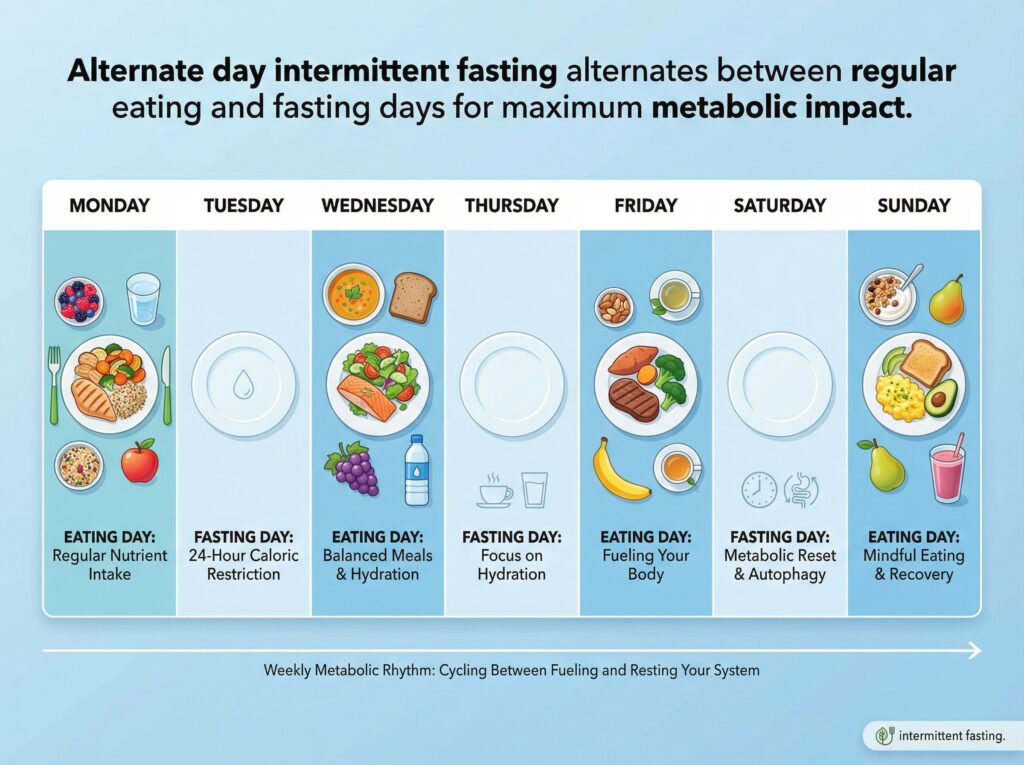
With this approach, you alternate between regular eating days and fasting days throughout the week in a consistent pattern. On fasting days, you either consume zero calories (complete fast) or limit intake to about 500 calories maximum.
This creates a pattern where you’re essentially fasting for a full thirty-six hours at a time when you factor in sleep – for example, from dinner on Monday evening until breakfast on Wednesday morning.
Metabolic Benefits Of Alternate Day Fasting
When it comes to pure metabolic impact and transformation, Alternate Day Fasting tops the charts in clinical research. A comprehensive network meta-analysis pooling over 150 trials gave ADF the highest SUCRA score – about 81% – for overall metabolic health benefits.
Head-to-head clinical trials consistently show ADF outperforms 16/8 fasting for rapid fat loss and insulin lowering over eight to twelve week study periods.
Key advantages documented in research include:
- Maximum insulin sensitivity improvements – ADF produces the strongest measurable effects on insulin resistance
- Rapid weight loss results – Significantly faster results compared to daily time-restricted eating patterns
- Anti-inflammatory effects – C-reactive protein levels fall by fifteen to twenty percent in pilot studies
- Significant calorie deficit – Creates about 500 additional weekly calorie deficit compared to 16/8 methods
The Major Downside: Adherence Challenges
Here’s the catch that researchers consistently find – dropout rates with ADF are roughly twice as high as gentler methods like 16/8 fasting. As one research team bluntly noted, “A schedule that works perfectly on paper is completely useless if patients quit after just one month.”
The thirty-six hour fasting periods create some serious challenges:
- Intense hunger episodes – Especially brutal during the initial two to three week adaptation period
- Social disruption – Makes maintaining normal social eating patterns very difficult
- Energy fluctuations – Highly variable energy levels between fasting days and eating days
- Exercise timing issues – Requires really careful workout scheduling around your fasting days
Direct Head-To-Head Comparison Of All Five Methods
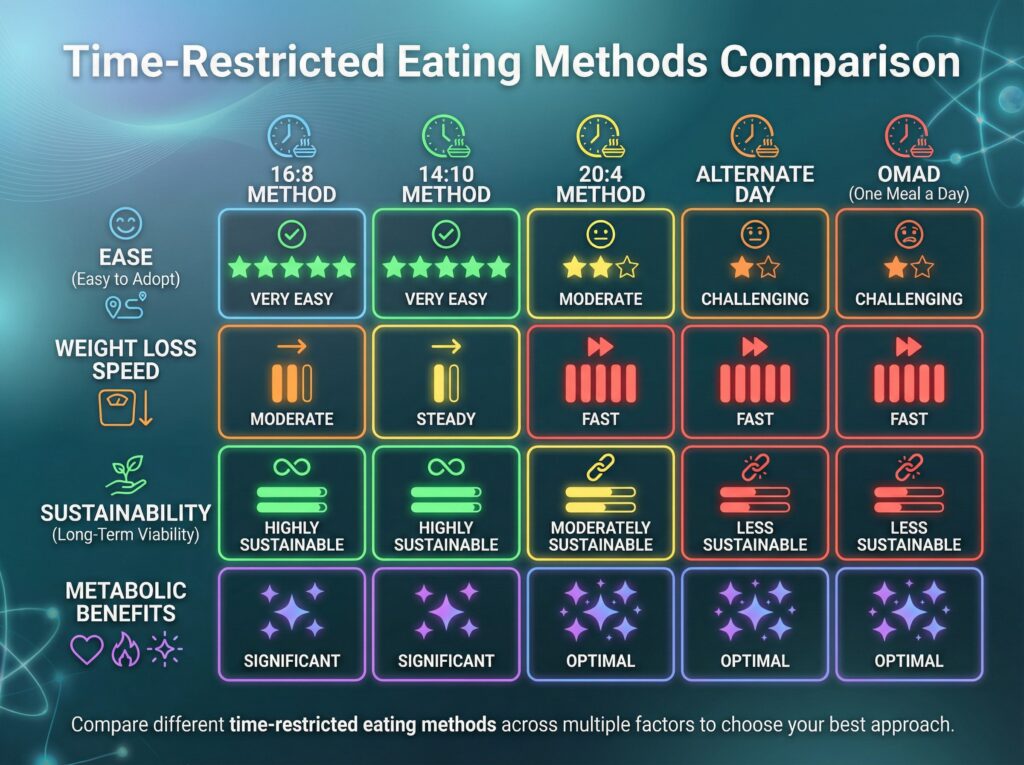
Now that we’ve explored each intermittent fasting method individually, lets look at how they actually stack up against each other across the key factors that matter most.
Weight Loss Speed And Effectiveness
When it comes to pure weight loss results and how fast you’ll see changes on the scale, the more extreme methods generally produce faster initial results. Alternate Day Fasting and the 5:2 diet show the most dramatic weight loss in short-term studies, with ADF achieving the highest metabolic transformation scores.
However, 16/8 fasting produces steady, sustainable weight loss with much higher long-term adherence rates and less misery. OMAD and the Warrior Diet fall somewhere in between, offering substantial weight loss for those who can actually stick with them beyond the first month.
Ease Of Daily Implementation
16/8 fasting wins hands-down for ease of implementation and fitting into normal life. Its simple, flexible, and fits naturally into most lifestyles without major disruption to your daily routine.
The 5:2 diet ranks second since you only deal with restriction two days per week. Meanwhile, OMAD, the Warrior Diet, and Alternate Day Fasting all require significantly more commitment and major lifestyle adjustments that many people simply cant sustain.
Long-Term Sustainability Factor
This is where the gentler time-restricted eating methods really shine in research. Studies consistently show that 16/8 fasting has much better long-term adherence because people can maintain it indefinitely without feeling constantly deprived or socially isolated.
The 5:2 approach also shows decent sustainability since most days feel completely normal. Meanwhile, the dropout rates for OMAD, twenty-hour fasts, and Alternate Day Fasting are considerably higher due to the intensity factor and social challenges they create.
Choosing The Right Intermittent Fasting Method For Your Life
So after absorbing all this information, which method should you actually choose for YOUR situation? The honest answer is: it depends entirely on your individual goals, current lifestyle, and health status.
Consider Your Experience Level First
If you’re brand new to intermittent fasting and have never tried any form of fasting before, starting with 16/8 fasting is almost always the smart move. It allows your body and mind to adapt gradually without overwhelming you with extreme hunger or crushing fatigue.
Once you’re comfortable with sixteen-hour fasts and want to experiment further, you could try the 5:2 diet or extend to eighteen or twenty-hour fasting windows and see how your body responds.
Factor In Your Actual Lifestyle
Your daily schedule and social commitments should heavily influence which intermittent fasting method you choose. If you regularly eat meals with family or have frequent business dinners, methods that allow daily eating like 16/8 fasting or the Warrior Diet work much better than Alternate Day Fasting where you’re completely off food every other day.
Work-from-home folks with super flexible schedules have way more freedom to experiment with OMAD or ADF without it completely disrupting their lives.
Align Method With Health Goals
What are you actually trying to achieve with intermittent fasting? If rapid weight loss is your primary goal and you’re willing to deal with some discomfort and social awkwardness, the more aggressive methods might be worth considering for short-term results.
For general health maintenance, steady metabolic improvements, and sustainable long-term results that you can actually maintain for years, the gentler daily fasting approaches tend to work significantly better.
Making Intermittent Fasting Work Long-Term
Regardless of which time-restricted eating method you choose, success comes down to a few key principles that apply across all approaches.
Focus On Nutrient Density During Eating Windows
When you do eat, make those calories actually count by choosing nutrient-dense whole foods instead of processed junk. Fill your plate with colorful vegetables, quality proteins, healthy fats from nuts and avocados, and fiber-rich foods that keep you satisfied for hours.
Avoid wasting your precious eating window on empty calories from ultra-processed foods that’ll leave you hungry, malnourished, and feeling terrible during your fasting periods.
Stay Properly Hydrated Throughout Fasting
Drinking plenty of water, unsweetened herbal tea, and black coffee helps manage hunger significantly and keeps you feeling good during fasts. Many people find that proper hydration makes the entire fasting experience way more tolerable and sustainable.
Listen To Your Body’s Signals
Pay close attention to how you actually feel on your chosen intermittent fasting protocol. Some initial hunger and minor adjustment discomfort is completely normal, but if you’re experiencing severe fatigue, persistent dizziness, or other concerning symptoms, that’s your body clearly telling you something needs to change.
The Bottom Line On Intermittent Fasting Methods
Intermittent fasting offers a flexible, science-backed approach to improving your health and managing your weight without obsessive calorie counting. Each of the five methods we’ve compared has legitimate benefits supported by solid research, but they also come with different challenges and suit different people’s needs.
The 16/8 fasting method stands out as the most accessible and sustainable option for most people, delivering solid results without extreme restriction or social isolation. The 5:2 diet offers a nice middle ground with impressive weight loss results for those who can handle two tough days per week.
For experienced fasters seeking maximum metabolic benefits and willing to endure more challenging protocols, OMAD, the Warrior Diet, or Alternate Day Fasting might be worth exploring carefully. Just remember that the “best” time-restricted eating method is ultimately the one you can stick with consistently while meeting your nutritional needs and maintaining your quality of life.
Start where you are right now, listen to your body’s feedback, and dont be afraid to adjust your approach as you learn what actually works for your unique situation.